PSHE KS3
Curriculum Intent
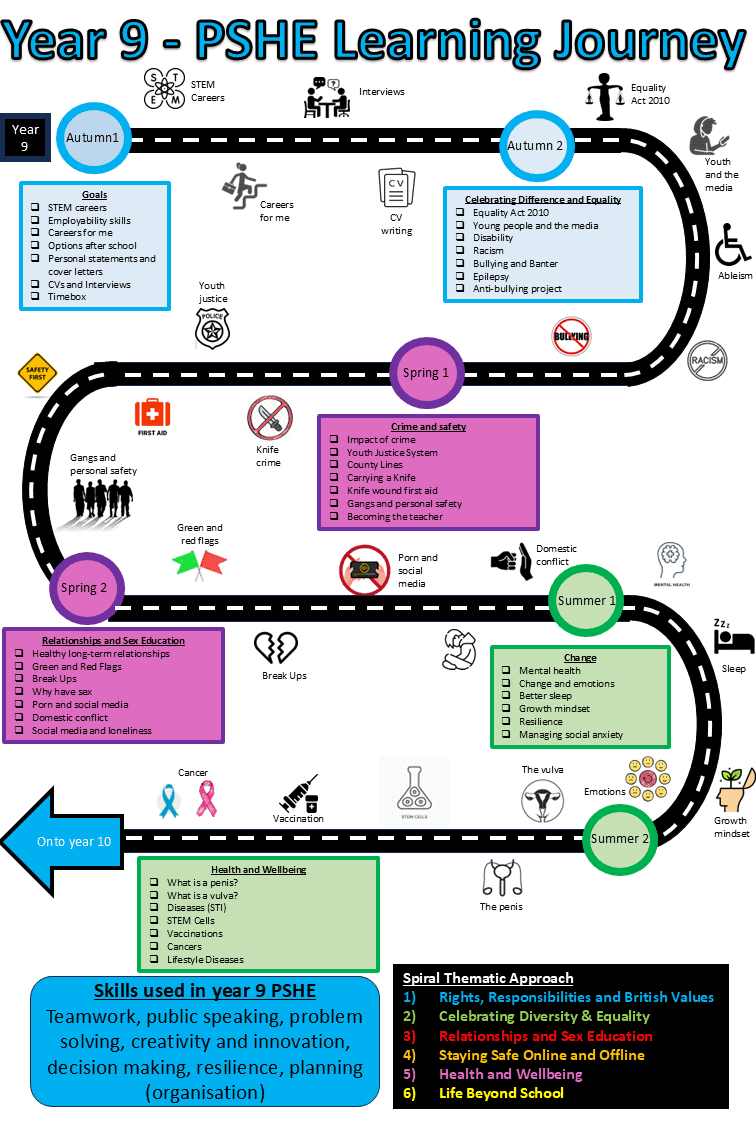
Our Year 9 PSHE curriculum is designed to support students in developing the personal awareness, emotional intelligence, and social responsibility needed to thrive in a complex and changing world. The curriculum empowers students to reflect on their values, relationships, and goals, while equipping them with the knowledge and skills to make informed, safe, and respectful choices.
We are committed to creating a safe and inclusive environment where every student can explore their identity, challenge stereotypes, and develop a sense of personal and social responsibility. Our aim is to prepare students not only for the challenges of adolescence, but also for life as thoughtful, respectful, and empowered young adults.
Lesson Plans
Further Information
Content
Module 1 – Goals
Module 2 – Celebrating Differences and Equality
Module 3 – Crime and Safety
Module 4 – Relationships and Sex Education
Module 5 – Change
Module 6 – Health and Wellbeing
Assessment
Class work will be gathered as evidence of study.
PSHE – Independent Study
You might want to look further into some of the topics which you study in class, a few useful website are suggested below:
Module 1 – Emotional wellbeing
- a) Young Minds
Link: https://www.youngminds.org.uk/
What it offers: Mental health advice, tips for coping with stress, anxiety, depression, exam pressure, and relationships.
Why it’s useful: Clear language, real stories, and support services (including a free textline).
- b) Kooth
Link: https://www.kooth.com/
What it offers: Free, safe, anonymous online counselling and emotional wellbeing support.
Why it’s useful: Live chat with qualified professionals, forums, daily journals, and helpful articles.
- c) Mind – for young people
Link: https://www.mind.org.uk/for-young-people/
What it offers: Info on mental health conditions, self-care strategies, and getting help.
Why it’s useful: Trusted national charity with tailored content for teens.
Module 2 – Keeping safe and healthy
- a) Teen Health – NHS
Link: https://www.nhs.uk/mental-health/children-and-young-adults/help-for-teenagers-young-adults-and-students/
What it covers: Physical and mental health, body image, exercise, sleep, sexual health, drugs, and alcohol.
Why it’s good: Trusted info written for teens, clear and non-judgmental
- b) Change4Life (now called Healthier Families)
Link: https://www.nhs.uk/healthier-families/
What it covers: Eating well, moving more, sugar swaps, and healthy snack ideas.
Why it’s good: Fun, interactive content focused on healthy living for young people.
- c) Childline – Staying safe
Link: https://www.childline.org.uk/
Covers: Personal safety, staying safe outside, peer pressure, gangs, and feeling unsafe at home or school.
Why it’s good: Completely confidential advice and a 24/7 helpline/chat.
- d) Fearless – Crimestoppers
Link: https://crimestoppers-uk.org/fearless
Covers: Crime awareness, peer pressure, gangs, weapons, and how to report concerns anonymously.
Why it’s good: Teens can report crimes without giving their name.
Module 3 – Social media
- a) Think you know (UK police)
Link: https://www.ceopeducation.co.uk/11_18/
Covers: Online safety, social media, sexting, grooming, and digital consent.
Why it’s good: Tailored for 11–18s, explains risks and what to do if something goes wrong online.
- b) UK Safer Internet
Link: https://saferinternet.org.uk/online-issue/social-media-3
Covers: Staying safe online when using social media
Why its good: covers key online safety topics, such a sexting, fake news, online gaming
Module 4 – Alcohol & Module 5 – Tobacco and drugs
- a) Matthew Project (local drugs and alcohol charity)
Link: https://www.matthewproject.org/
Covers: empowering people to overcome issues with drugs, alcohol and mental health
Why it is good: offers local support
- b) Talk to Frank
Link: https://www.talktofrank.com/
Covers: honest information about drugs
Why it is good: Covers a wide variety of drugs, their effects, and help and advice when considering your choices
Module 6 – Sexual Health
- a) Brook (sexual health and wellbeing advice)
Link: https://www.brook.org.uk/
Covers: Contraceptive advice and pregnancy testing
Why is it good? It offers a text chat service, webchat and an ‘ask Brook 24/7’ tool
- b) NHS – where can I get sexual health advice
Link: https://www.nhs.uk/live-well/sexual-health/where-can-i-get-sexual-health-advice-now/
Covers: Up to date guidance on local places (services) to get contraception or to be tested, also medically accurate
Why is it good? Accessible any time, 24/7
Module 7 – Respectful relationships
- a) Respect Not Fear
Covers: Spotting signs of abuse, building respectful relationships, and how to get help.
Why it’s good: Simple, direct, and clear resources designed specifically for teens.
- b) The Mix – Relationships
Covers: Dating, breakups, peer pressure, and navigating tricky situations respectfully.
Why it’s good: Honest, youth-led advice with helpline and online chat options.
Module 8 – Families and parenting
- a) Family Lives
Link: https://www.familylives.org.uk/
Topics covered: Parenting challenges, family conflict, communication, and teen-parent relationships.
Why it’s good: Offers real-life advice, helplines, and relatable stories from young people and parents.
Module 9 – Financial choices
- a) BBC – PSHE Financial literacy
Link: https://www.bbc.co.uk/teach/class-clips-video/articles/zkh8cqt
Covers: information all about money
Why is it good? Clear to read information with supporting videos
- a) The Money Charity
Link: https://themoneycharity.org.uk/work/young-people/
Covers: Budgeting, setting goals and money products
Why is it good? Offers a free student money manual
Module 10 – Careers and your future
- a) BBC Bitesize – Exam stress and wellbeing
Link: https://www.bbc.co.uk/bitesize/articles/z8dw239
What it offers: Videos, quizzes, and articles on dealing with exam stress, pressure, and staying healthy.
Why it’s useful: Relatable and bite-sized advice written for students.
- b) The National Careers Service
Link: https://nationalcareers.service.gov.uk/explore-careers
What it offers: free, impartial, and expert guidance to help individuals of all ages make informed decisions about learning, training, and work.
Why its useful: offers tools to explore different job roles, whats involved and how to get started
Module 11 – Living in modern Britain
- a) Parliament UK – Education
Link: https://learning.parliament.uk/en/
What it offers: Interactive resources, lesson plans, and videos on how UK democracy works, elections, and the role of MPs.
Why it’s useful: Encourages understanding of democratic processes and active citizenship.
- b) Stop Hate UK
Link: https://www.stophateuk.org/
What it offers: Easy-to-follow guides on rights, laws, community, diversity, and identity in the UK.
Why it’s useful: KS4-friendly, bite-sized content with quizzes and real-life examples.
- c) Votes for Schools
Link: https://www.votesforschools.com/
What it offers: Weekly debate topics around current social, political, and moral issues.
Why it’s useful: Builds confidence, critical thinking, and democratic engagement.